The Problem
A core concept underpinning the study of texts in the English classroom is the idea that writers make conscious choices in their crafting of a text, which in turn tend to have specific impacts on the reader of the text. One of the things English students struggle with is giving generic responses when asked to comment on the effect of a text on the reader. How many of us have been pulling our hair out at these types of responses to a question about effect on the reader:
It moves the story along
It draws the reader in
It makes the reader want to read on
Aaaaaaaagh!
Of course, we as teachers of English know the effect on the reader completely depends on and is directly linked to the specific choices a writer made in the crafting of the text in the first place.
A possible solution
This concept is difficult to explain and understand using words alone. Dual-coding this concept through the use of an input-output diagram can help to explain this idea.
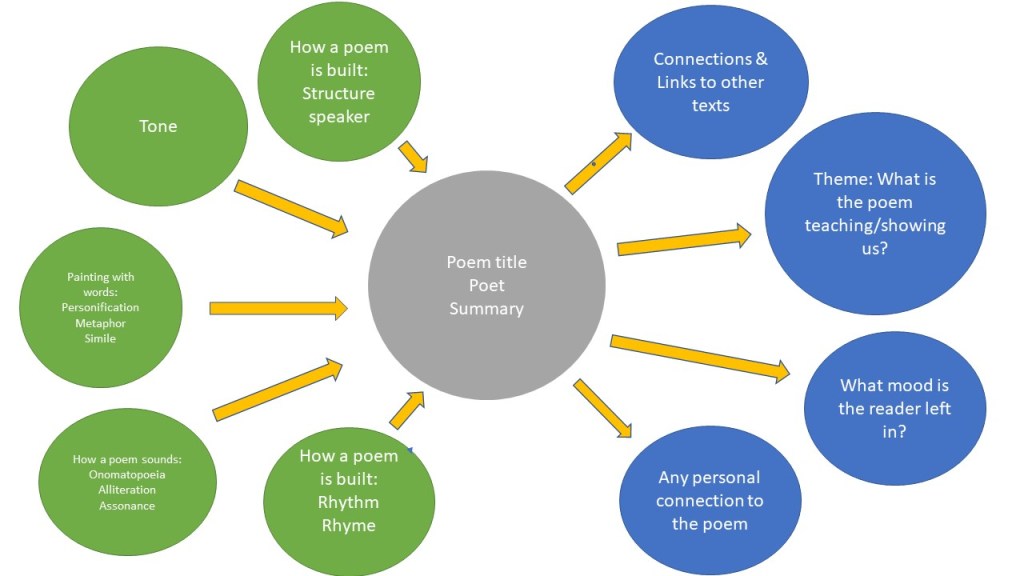
The techniques used to build a text are organised on the input side (green bubbles), arrows represent their input into the text. The text itself sits in the middle of the diagram, as the anchor and link between both sides. The output from the text sits on the opposite side (blue bubbles), with the arrows representing the various ways a text can impact a reader.
In my class, I get students to physically trace the movement from the green bubbles (authors craft) over to the blue bubbles (effect on the reader). For example the tone a poet writes in can directly affect the mood a reader is left in, or the speaker of the text may remind a reader of another text, or perhaps the rhythm and rhyme of the poem evokes a nostalgic memory in the reader of childhood.
If they cant trace the path from one side to the other- they cant write it.
Making Notes: Input-Output Organiser
This input/output layout can thereafter be used as a graphic organiser by a student for creating notes on a text. Students creating their own graphic organiser improve their understanding of the relationship and connection between the authors/poets choices and their effect on the reader. Students then use the graphic organiser both as a scaffold when doing extended writing about the text and also as a revision aid for exams.
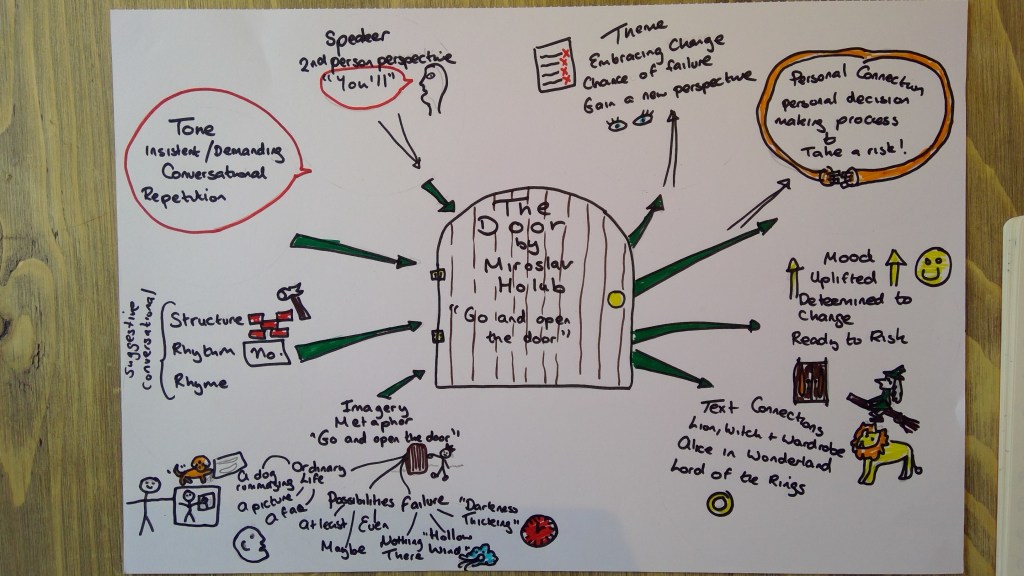
YouTube How To Video
Watch this How to Video to see how the Note-making process is centred around the relationship between text and audience.
 The English teacher